

second-brain · onboarding · knowledge-sharing
Onboarding is about the person, not the folder
New colleagues at TwoFeetUp no longer read through folders. Their questions go to the Second Brain, and the first week is about how they work and collaborate.
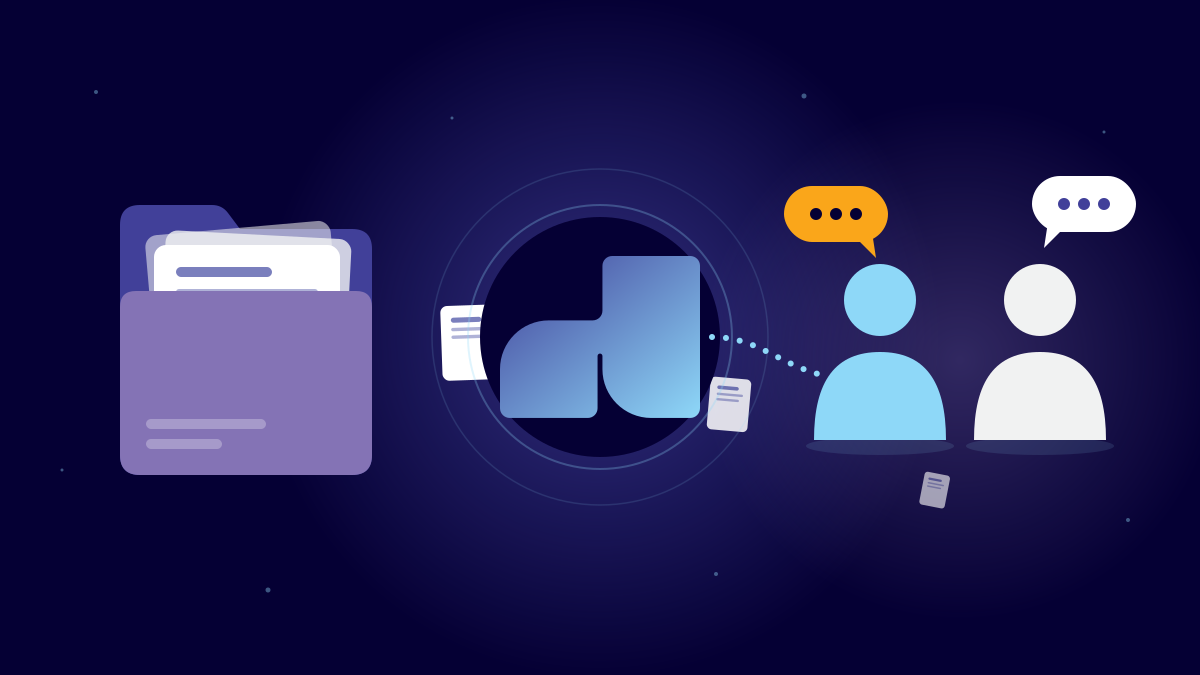
A new colleague at TwoFeetUp doesn't get a stack of folders. No reading list of forty documents, and no weeks of shadowing to work out where everything lives. We no longer onboard anyone on knowledge.
Onboarding hasn't got smaller. It's about something else now.
The problem with information-first onboarding
In most organisations, the first working week revolves around information transfer. Where are the client files? What does a proposal look like? What was agreed with that one client last year? Why do we do it this way?
That knowledge rarely lives in one place. Some of it is in folders, some in mailboxes and a large part in the heads of experienced colleagues. New starters first have to work out who to ask and where things are, before they can learn how the work gets done here.
New colleagues lose their first weeks to that searching. It costs experienced colleagues too, because they become the help desk. Every question is fair. Added up, though, they keep pulling the people who know the most away from their work. And the organisation stays dependent on whoever happens to be around: when someone leaves, they take a piece of what the organisation knows home with them.
Before: information-first onboarding
- Reading forty documents
- Weeks of shadowing a colleague
- Figuring out where everything lives
- Constantly interrupting someone with a question
Now: people-first onboarding
- How you work
- Where your creativity lies
- How our culture works
- Which workflows we use
Factual questions go to the Second Brain, with the source attached.
What we do talk about in the first week
That week is about things you won't find in any folder. We talk about how you work: what gives you energy, how you like to collaborate and what you need to get going on your own. About your creativity: what you bring that we don't have yet, and where it will count most. About our culture: how we make decisions, give feedback and what we expect from each other.
And about our workflows: how we do the work together, with AI and with each other. You don't need to read the documents themselves; you pull them up when you need them.
Why information is no longer on the agenda
Everything we know, have decided and have made as an organisation lives in our Second Brain: curated company knowledge that AI can read. New colleagues ask their questions there and get the answer that used to live in someone's head, or in a mailbox nobody opens anymore.
That answer comes from our own knowledge and follows our agreements. A language model's general memory doesn't come into it. Every answer shows its source, so someone new can check it for themselves and doesn't have to guess which version of a document is the right one.
A question to the Second Brain never feels like a stupid question, either. New colleagues dare to ask as often as they need to, without feeling they are keeping anyone from their work.
What a Second Brain doesn't replace
The Second Brain does the looking-up. Personal guidance, the first conversations with the team and starting on real work together are still done by people, and there is more time for them now.
It does need upkeep. Knowledge has to be current and someone has to own it. That is why a Second Brain is curated: only what is correct goes in. Skip that, and a new colleague gets the same outdated answers as from the old folder. Just faster.
From our team to JCI Netherlands
I recently presented this way of working at the national meeting of JCI Netherlands, the network for young professionals and entrepreneurs up to 40, with local chambers across the country. The chambers responded so enthusiastically that we are now starting a pilot together.
The aim of that pilot is to make JCI's knowledge something everyone shares. Today it is scattered across people, mailboxes and board years. Soon it should sit in one place where anyone can ask for it. Agents act as the librarians: they look up the right answer and show where it comes from.
JCI gets a new board every year, and that handover is where the pilot should help. A new board then starts with the decisions, agreements and lessons of the last one, instead of from scratch. Volunteers no longer have to dig through old emails and folders to reconstruct what was already known. The time that frees up goes to people and to what the chambers want to achieve in their own area.
Onboarding starts with where knowledge lives
New colleagues need information, and that won't change. What you choose is the route: through colleagues, or through a place that is always open, stays current and shows the source with every answer. Choose the latter, and the first working week goes back to what it's for: getting to know each other.
Curious where your organisation's knowledge lives today? Book a discovery call and we'll look at where knowledge gets lost, including in onboarding.